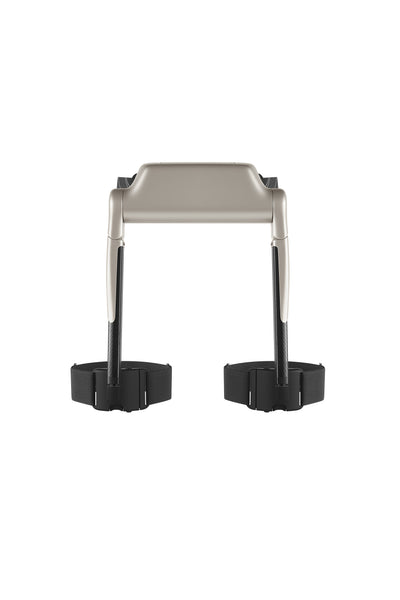
What Is a Wearable Exoskeleton for Daily Mobility?
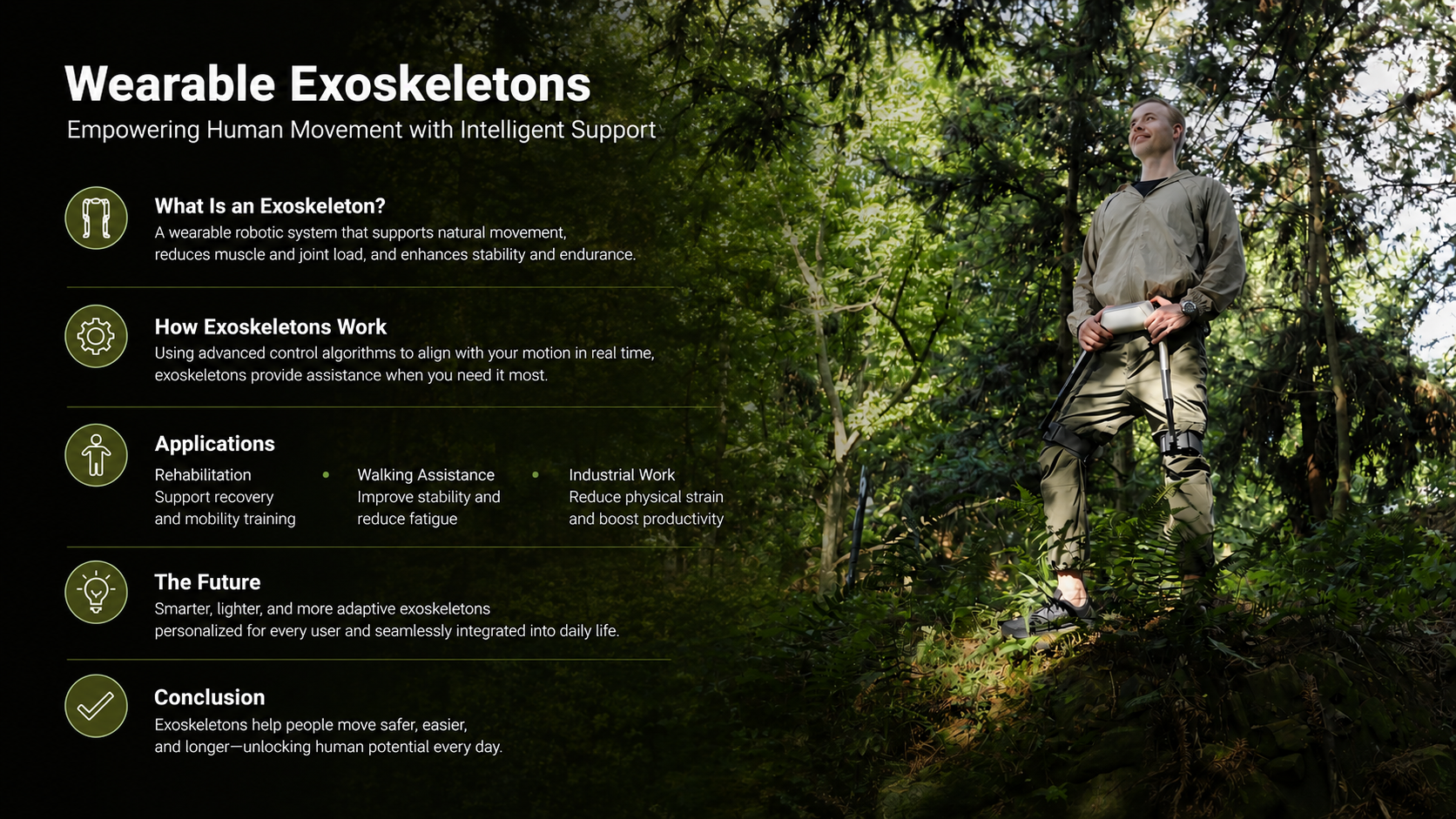
A wearable exoskeleton for daily mobility is a non-medical wearable robotics system designed to enhance human walking endurance, reduce fatigue, and support movement in real-world environments.
To understand how it works, it is important to first understand the foundation of exoskeleton technology.
Learn more about the fundamentals of exoskeleton systems
→ What is Exoskeleton
Life Without Limits: A New Era of Human Mobility
What if your walking endurance could be doubled?
What if daily commuting no longer led to fatigue?
This is the direction of AI-powered wearable exoskeleton technology.
Modern human mobility is no longer defined only by biology, but increasingly enhanced by wearable robotics.
Moving Beyond the “Medical Device” Era
Historically, exoskeleton technology was limited to rehabilitation and medical environments.
However, mobility is not only a medical issue—it is a daily quality-of-life factor.
The Tendex FX-E7 wearable exoskeleton represents a shift toward daily mobility enhancement systems rather than corrective tools.
See how modern exoskeleton systems evolve technically
→ Impedance vs Admittance Control in Exoskeletons
How Does a Wearable Exoskeleton Work?
Modern powered exoskeleton systems combine AI, sensors, and mechanical assistance to support natural human movement.
Core Components
-
- Motion Sensors
- AI Control System
- Actuation System
Instead of replacing human movement, the system enhances it.
For example:
-
- Walking uphill → additional support
- Stair climbing → adaptive assistance
- Long walking → fatigue reduction
Engineered for Real-World Daily Use
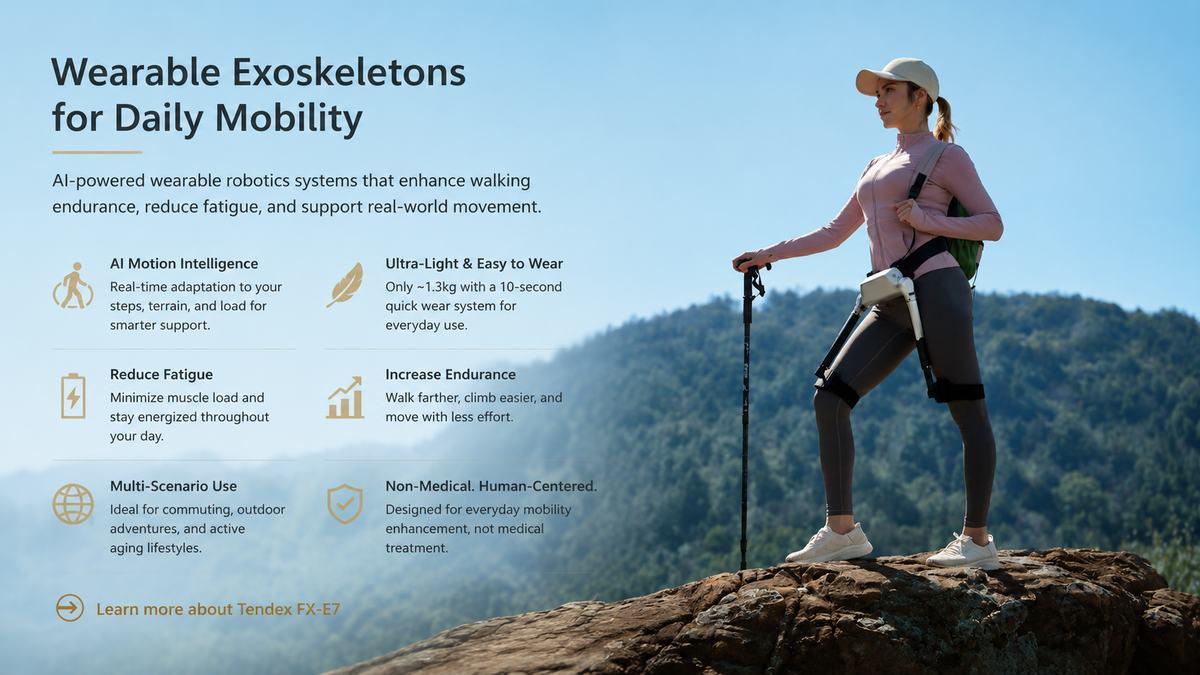
Unlike bulky industrial exoskeletons, the Tendex FX-E7 wearable exoskeleton is designed for everyday mobility.
Key Features
-
- Ultra-lightweight (~1.3kg)
- 10-second quick wear system
- Minimalist wearable structure
These features make it suitable for real-world environments such as commuting, walking, and outdoor movement.
AI Motion Intelligence: Smarter Human Movement
What makes next-generation exoskeletons different is AI motion intelligence.
The Tendex FX-E7 adapts in real time based on:
-
- Step rhythm
- Terrain changes
- Load variation
This transforms it from a passive device into a predictive mobility system.
Benefits of Wearable Exoskeletons for Daily Mobility
1. Reduced Fatigue
Less muscle load during walking and movement.
2. Increased Walking Endurance
Users can walk longer distances with less effort.
3. Improved Mobility Efficiency
Movement becomes smoother and more energy-efficient.
Exoskeleton vs Traditional Mobility Support Devices
| Feature | Exoskeleton | Traditional Devices |
| Assistance Type | Active | Passive |
| Intelligence | AI-driven | None |
| Fatigue Reduction | High | Limited |
| Fatigue Reduction | Strong | Basic |
Exoskeletons provide active augmentation, not passive support.
Multi-Scenario Applications
1. Urban Mobility
Reduce fatigue during daily commuting and walking.
2. Outdoor Walking & Hiking
Enhance endurance on long-distance routes.
3. Active Aging
Support movement for aging populations.
The Future of Human Augmentation Systems
The future of mobility lies in human augmentation systems, not traditional assistive tools
Research in wearable robotics shows a clear shift from rehabilitation-focused devices to everyday augmentation systems (Vitiello et al., 2023).
FAQ
1.What is a wearable exoskeleton used for?
Used to enhance walking ability and reduce fatigue.
2.Is it medical equipment?
No, Tendex FX-E7 is designed for non-medical daily mobility use.
3.Who is it for?
Commuters, outdoor users, and active aging populations.
→ Learn more about exoskeleton
References
- Vitiello et al., 2023, Nature Reviews Methods Primers
- Young & Ferris, 2017, IEEE TNSRE
- Herr, 2009, Journal of NeuroEngineering and Rehabilitation
- McKinsey Global Institute, Future of Work Report


Leave a comment
This site is protected by hCaptcha and the hCaptcha Privacy Policy and Terms of Service apply.