What Is a Walking Exoskeleton?
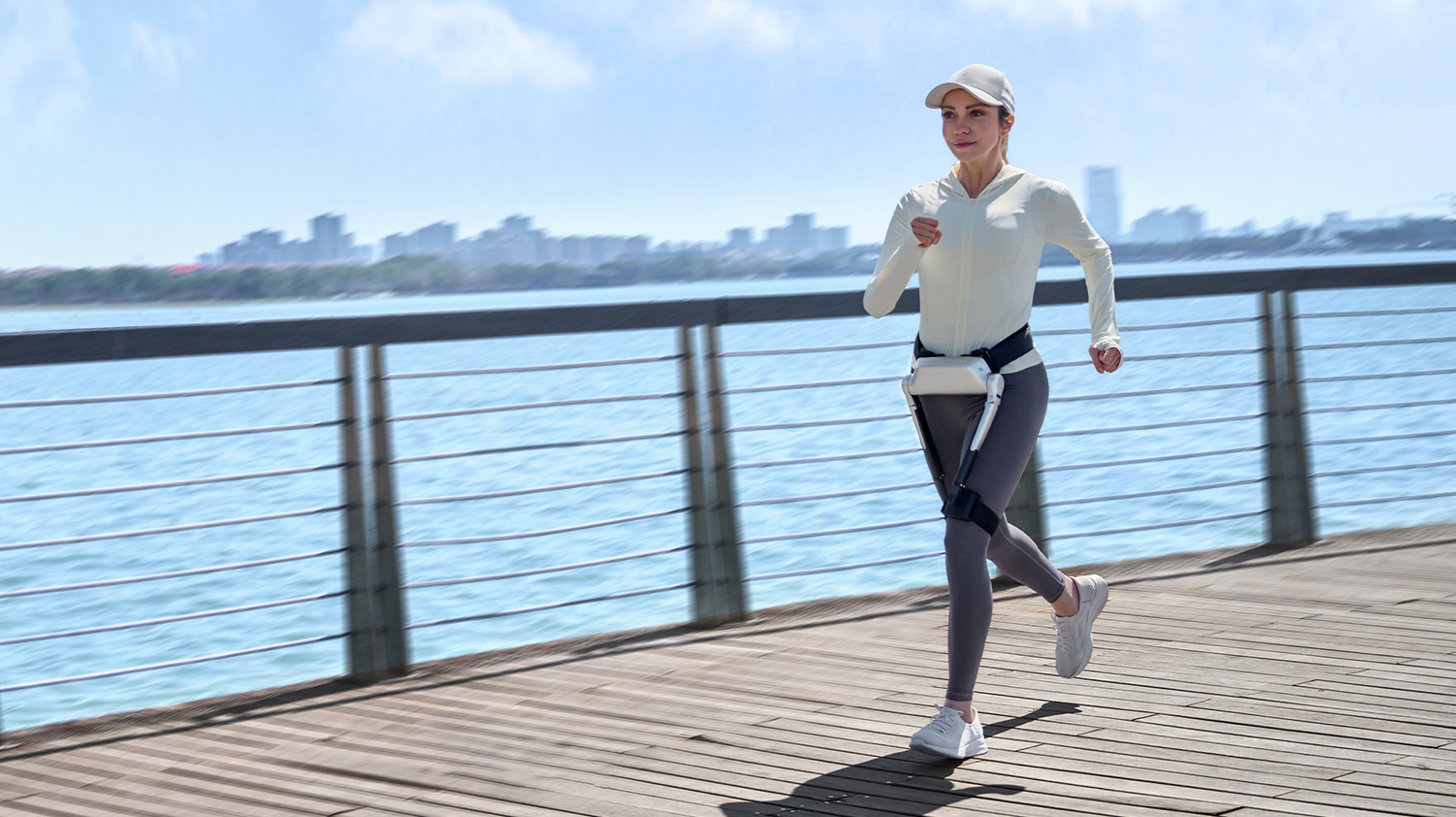
A walking exoskeleton is a wearable device that adds mechanical power to your natural stride. Motors sit alongside your hips, sense the movement you are already making, and contribute additional force in the same direction. You walk the way you always have. The device makes each step cost you less.
The category is new enough that most people meet it through science fiction first, which sets expectations in an unhelpful place. There is no armour. Nothing lifts you off the ground. A modern consumer exoskeleton is closer in spirit to an e-bike than to a machine that walks for you.
How Does an Exoskeleton Actually Work?
Four things happen, continuously, in a loop that runs faster than you can perceive.
It senses. Torque, position and orientation sensors read your movement many times per second. The device is tracking the angle of your hip, the direction of travel, and the force you are producing.
It recognises. Software compares that stream of data against known movement patterns and identifies what you are doing. Level walking, stair climbing, ascending, descending and running each produce a distinct signature.
It assists. Motors apply force in the direction your leg is already travelling, timed to the swing phase of your stride. The assistance is a contribution, not a replacement. Your muscles still do the work of walking. They simply do less of it.
It adapts. When your movement changes, the assistance changes with it. Step off a flat path onto a staircase and the profile shifts without any input from you.
The important part is the timing. Force applied at the wrong moment fights your stride instead of supporting it. Everything in the category comes down to how accurately a device reads what you are doing and how quickly it responds.
Where the Power Is Placed
Not all wearable robotics assist the same joint, and the choice determines what the device is good at.
| Placement | Assists | Best suited to |
|---|---|---|
| Hip | Leg swing, hip flexion and extension | Walking distance, ascents, stairs, general endurance |
| Knee | Extension on ascent, load control on descent | Steep descent, technical terrain |
| Ankle | Foot clearance and push-off | Gait pattern support |
| Lower back | Lifting and bending load | Repetitive lifting work |
The hip is the largest contributor to forward propulsion in human walking. That is why hip-mounted systems have become the common starting point for consumer devices built around covering ground.
Who Are They For?
The honest answer in 2026 is that the consumer category is still defining itself, and most people who own one bought it for one of three reasons.
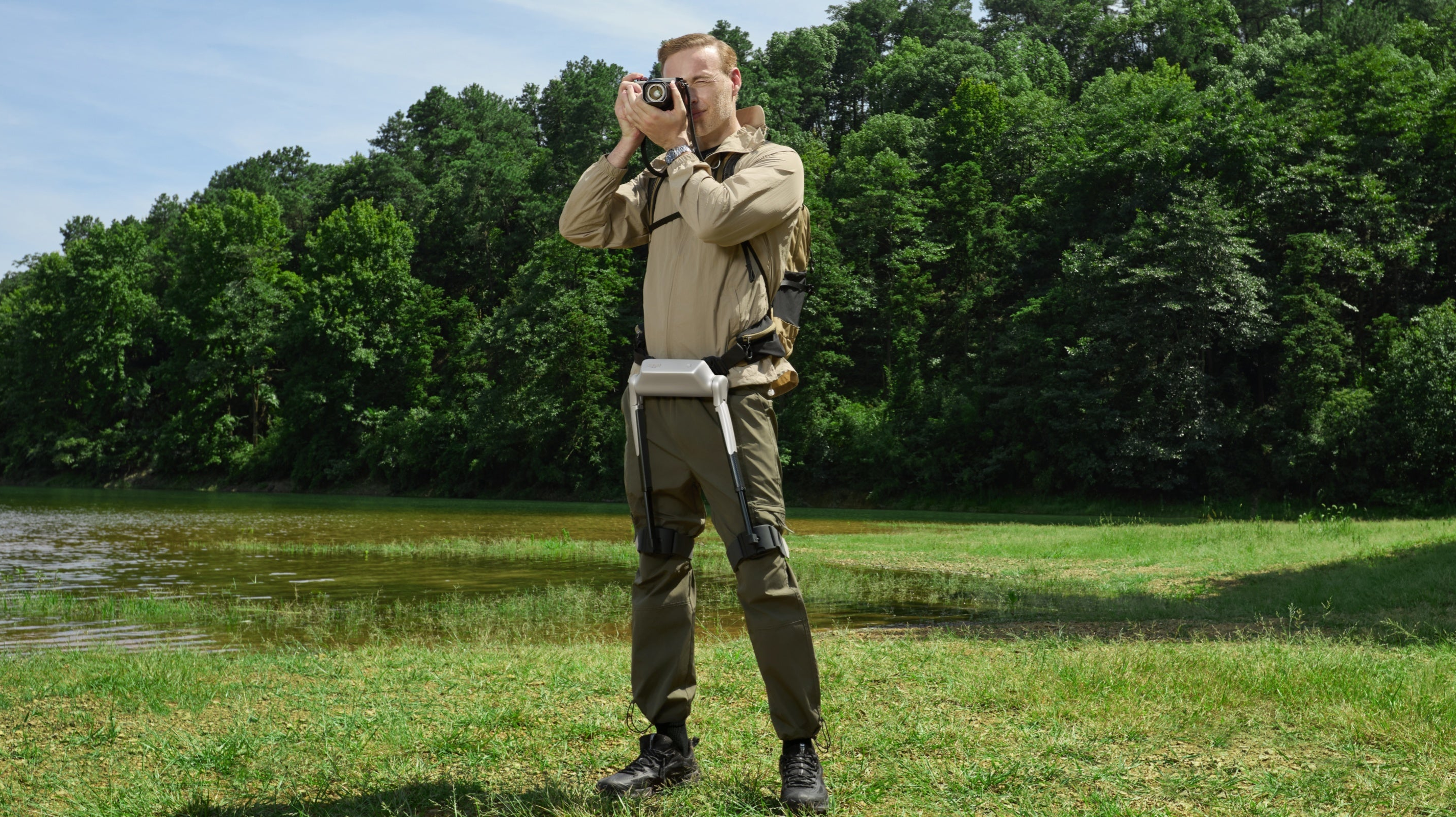
Distance. Hikers, trekkers and long-distance walkers who want the last hours of a route to feel like the first ones. Fatigue is what usually ends a day outdoors, not capability.
Elevation. Anyone who spends time on sustained climbs, stairs or steep ground. Ascending is where energy cost rises fastest, and it is where added power is most noticeable.
Volume. Travellers and city walkers who cover far more ground on a trip than in ordinary life, day after day, without any conditioning for it.
What connects the three is not limitation. It is ambition about distance.
What to Look For
Weight. Every gram you add is a gram you carry for the whole route. A device that assists well but weighs too much spends its own benefit. This is the single most useful number for comparing products, and it is the one most easily verified.
Packed size and setup time. A device you have to plan around gets left at home. The realistic test is how it behaves when you are not using it: how small it folds, and how fast it goes on and comes off.
Terrain recognition. A system that only understands level walking will be least helpful exactly where you want help most. Ask what movement types it recognises and how quickly it switches.
Control. Fixed assistance suits nobody for long. Adjustable modes let you take more support on a climb and less on easy ground, which also protects your battery.
Battery honesty. Range figures are produced under specific conditions. Ask what those conditions were.
Where TENDEX Sits
The TENDEX E7 is a hip-mounted walking exoskeleton built for the outdoor and travel end of this category rather than the industrial or clinical one.
It weighs approximately 1.3 kg, which is the lightest in its class. It folds to roughly the size of a water bottle and goes on in under ten seconds. Independent motors at each hip contribute force to your stride, and AI gait recognition identifies walking, stairs, inclines, declines and running, adjusting assistance as terrain changes. Four modes let you set how much support you want, and the companion app handles the rest.
Two variants are available. E7 City is built around daily distance, transit and stairs. E7 Explore is built for trails, sustained climbs and longer days.
The Short Version
A walking exoskeleton does not walk for you. It reduces what walking costs you, so that distance stops being the thing that decides how far you go.

Leave a comment
This site is protected by hCaptcha and the hCaptcha Privacy Policy and Terms of Service apply.