How to Climb Longer Without Burning Out
Most people do not run out of fitness on a climb. They run out of pacing in the first ten minutes and spend the rest of the day paying for it.
Going uphill is the most expensive thing you do on foot. On level ground, walking is close to a controlled fall: your body stores and returns energy with each step and the cost per kilometre stays low. Tilt that ground upward and the free energy disappears. Now you are lifting your entire body weight against gravity, repeatedly, and every gram you carry is being lifted with you.
That is why the climb sets the tone for the whole day. Here is what actually changes the arithmetic.
1. Start Slower Than Feels Right
The most common mistake on a climb is made in the first ten minutes, when you feel fresh and the gradient has not bitten yet.
Ascending at an intensity you cannot hold shifts your body toward energy production that burns through reserves quickly and leaves a cost you settle later. Come back under that threshold and you can hold a pace for hours.
The practical test is conversation. If you cannot speak a full sentence comfortably, you are climbing too fast for the length of the day. Slow until you can. On a long ascent, the person moving steadily past the group that sprinted the first switchback is not fitter. They are better paced.
2. Shorten Your Steps, Raise Your Cadence
Big steps on steep ground feel efficient and are not. Each tall step is a single-leg squat with your pack on, and a series of them fatigues your quads fast.
Shorten the step and take more of them. Same distance covered, load spread across many small efforts instead of a few large ones. On steep pitches, aim to keep your step height low enough that your knee stays below the level of your hip.
Steps and staircases follow the same rule. When the riser height is fixed and you cannot shorten the step, slow the cadence instead and keep the rhythm even.
3. Give Your Breathing a Pattern
Under load, breathing tends to go shallow and irregular, which is inefficient exactly when efficiency matters.
Pick a pattern and hold it: two steps in, two steps out. Adjust to three and three on gentle ground, two and one when it steepens. The specific ratio matters less than having one. A pattern gives your effort a metronome, and it tells you immediately when the gradient has changed, because the pattern breaks before your legs complain.
4. Use the Rest Step on Sustained Ground
On long, steep, unrelenting climbs, the technique that mountaineers use is worth borrowing.
At the top of each step, pause for a fraction of a second with your trailing leg straight and locked, letting your skeleton hold your weight rather than your muscle. It is a very short rest, repeated hundreds of times. The cumulative effect over an hour of climbing is substantial, and it costs you almost nothing in speed.
5. Carry Your Load High and Close
Weight held low or far from your back swings, and swing has to be corrected by muscle you would rather spend on climbing.
Pack heavy items high and against your spine. Tighten your hip belt so the weight sits on your hips rather than hanging from your shoulders. Then cinch the load lifters until the pack stops moving independently of you. A pack that moves with your body costs less than a lighter pack that does not.
6. Read the Gradient Before You Are In It
Look up. Most climbs are not uniform, and the ones that hurt are the ones you meet at the wrong intensity.
Spot where the gradient eases and use those sections to recover, rather than pushing hardest on the steepest pitch and arriving at the flat too spent to take advantage of it. On switchbacks, the outside of the turn is longer but shallower. On a long day, take it.
A Note on the Descent
Coming down is not the reward, and treating it as one is how good days end badly.
Descending loads your muscles as brakes, which is a different and less familiar kind of work. Shorten your steps here as well, keep your knees soft rather than locked, and resist the urge to let gravity set your speed. If you use poles, this is where they earn their weight.
Where the E7 Changes the Maths
Everything above is technique, and technique is free. Assistance is the other lever.
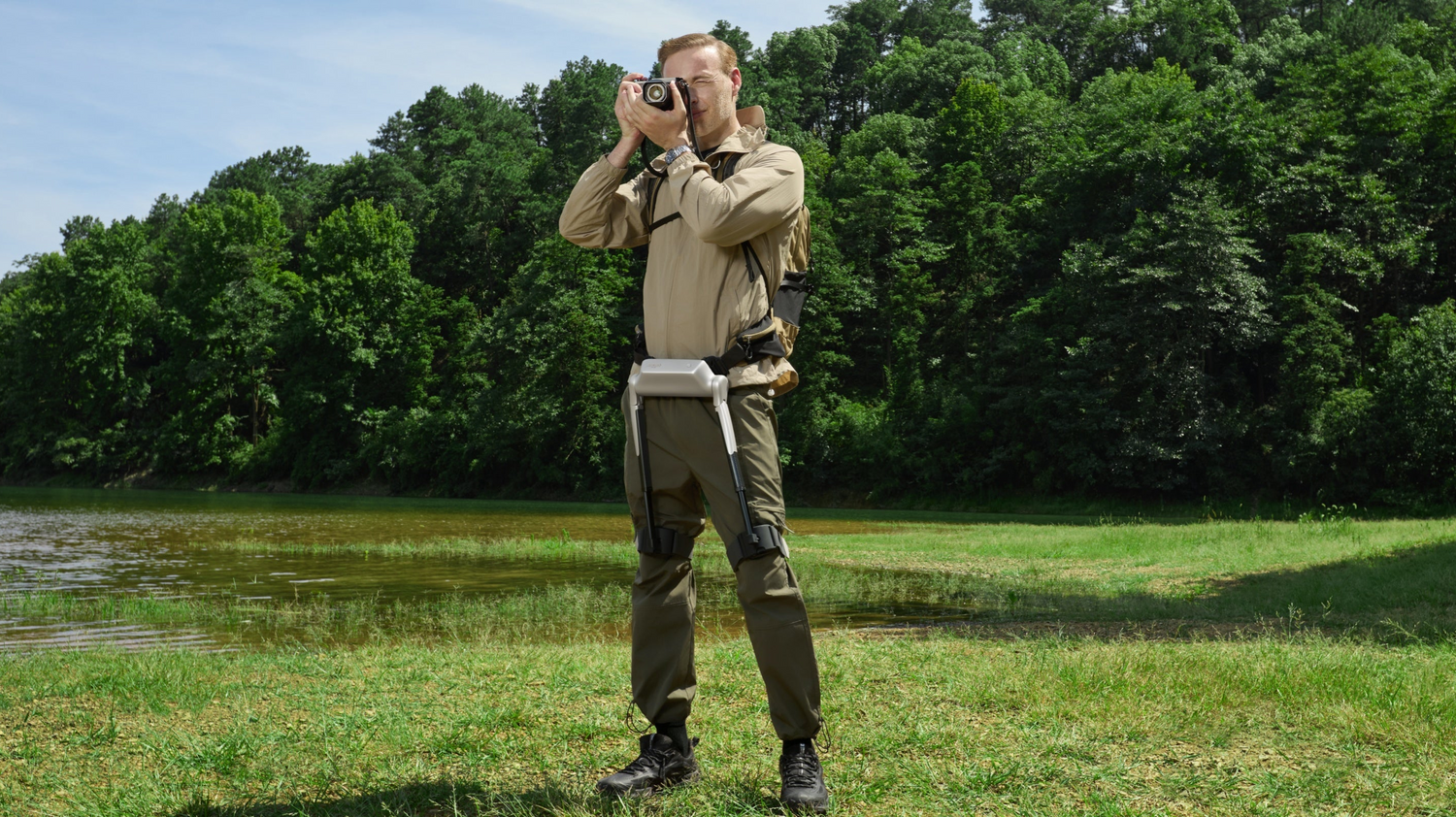
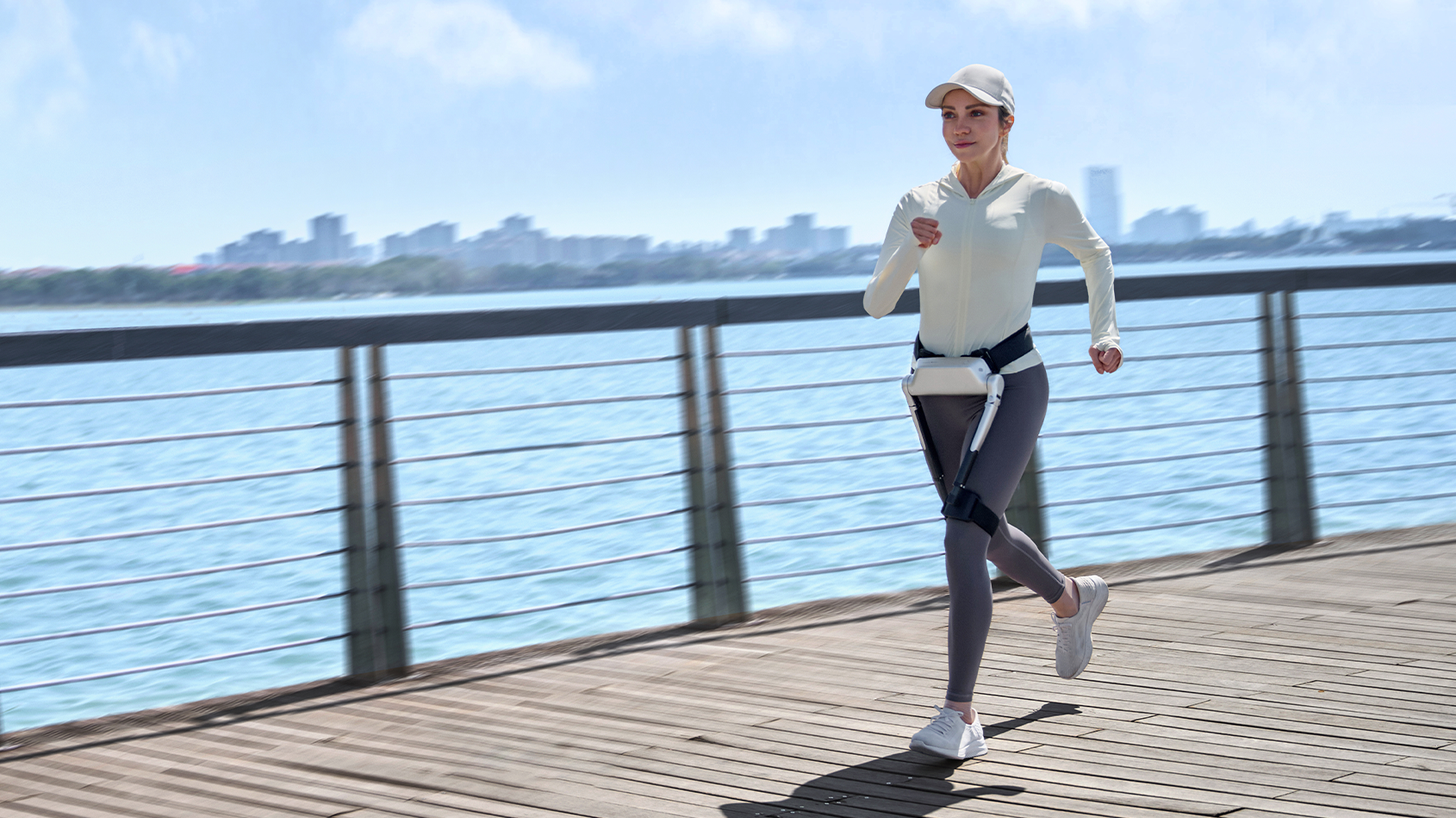
The TENDEX E7 places independent motors at each hip and contributes force to your stride in the same direction your leg is already moving. On an ascent, that force arrives at the point in the movement where the cost is highest.
The system recognises when you have moved from level ground onto a climb and adjusts without any input from you, then adjusts again for stairs, for descent, and for the flat section at the top. Four assistance modes let you take more support on a sustained climb and dial it back when the ground eases, which also protects your range across a long day.
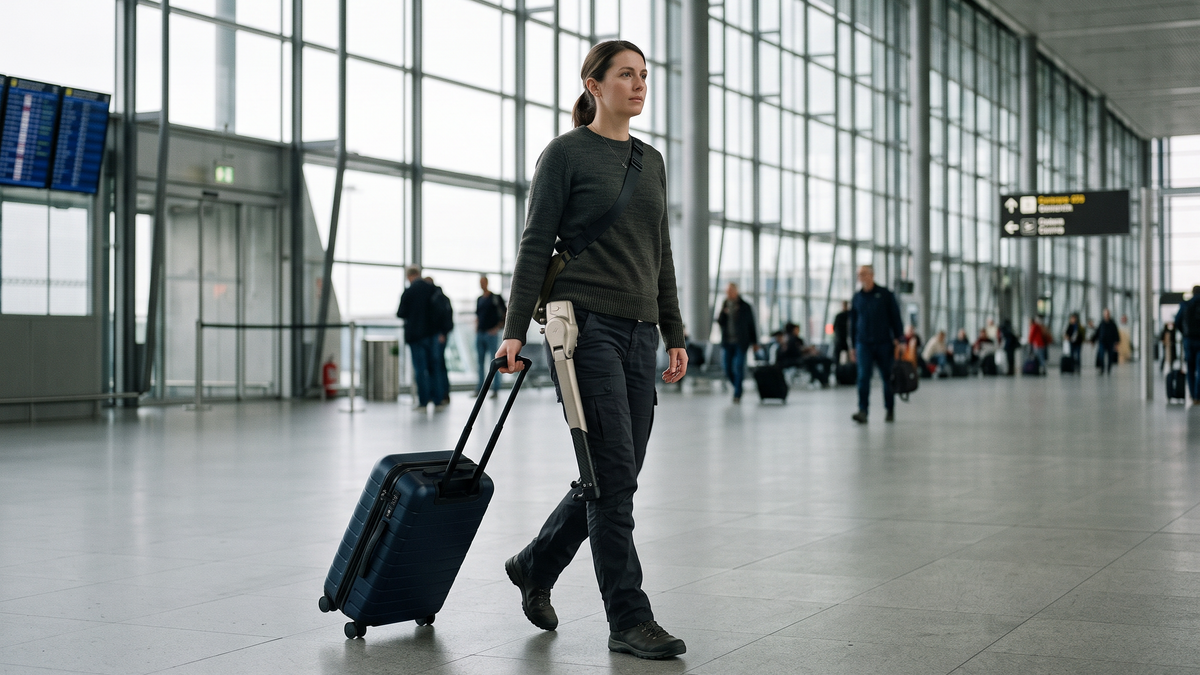
At approximately 1.3 kg, it is the lightest device of its kind, which matters more on a climb than anywhere else. On flat ground, added weight is a rounding error. On a sustained ascent, you are lifting it with every step.
E7 Explore is the variant built for this kind of terrain.

Leave a comment
This site is protected by hCaptcha and the hCaptcha Privacy Policy and Terms of Service apply.