How to Walk a City All Day
A city break quietly asks your body to do something it has not trained for.
The average person covers three to four thousand steps on an ordinary day. On a trip, that number regularly clears twenty thousand. That is roughly fifteen kilometres, most of it on stone and pavement, in shoes chosen partly for how they look, carrying a bag, with no rest day scheduled.
Nobody trains for this. It is a long hike, repeated for four days, on the least forgiving surface available. The result is familiar: the first day is wonderful, the second is fine, and by the third you are choosing what to see based on how far it is.
Here is what keeps day four feeling like day one.
1. Break the Day in Two
Almost every city itinerary is built as one continuous block from breakfast until dark. This is the single biggest cause of the third-day slump.
Split it instead. Walk hard in the morning, return to your accommodation in the early afternoon, and go out again in the evening. The Mediterranean cities that built this into their culture were not being lazy. They were being sensible about heat and distance.
If returning is impractical, the substitute is a genuine seated hour somewhere in the middle. Not a coffee standing at a counter. An hour, sitting, shoes off if you can manage it.
2. Stop Before You Need To
Fatigue is not linear. There is a threshold past which an hour of rest buys back far less than it would have twenty minutes earlier.
Take short stops on a schedule rather than on demand: five minutes seated every hour, before anything starts to complain. This feels unnecessary in the morning, which is exactly why it works. You are spending small amounts early to avoid a large bill later.
3. Alternate Your Surfaces
Cobblestones are beautiful and punishing. They are uneven, they force constant small stabilising corrections, and hours of them fatigue you in ways smooth ground does not.
Where you have a choice, alternate. Take the park route between two sights rather than the direct street. Vary the demand on your feet across the day instead of giving them six hours of the same thing.
4. Solve Your Shoes Before You Leave
Two pairs, alternated across days, outperform one better pair worn continuously. Different shoes load your feet differently, and rotating them spreads that load.
Neither pair should be new. A trip is not the place to discover how a shoe behaves at kilometre twelve. Wear both for a few long days at home first.
5. Carry Less, and Carry It Better
Everything in your day bag is being carried fifteen kilometres. Take it out, put it on a table, and remove a third of it.
What remains should sit high on your back and close to your spine, with the straps tight enough that the bag does not swing. A crossbody bag loads one shoulder for six hours and produces exactly the asymmetry you would expect. Use two straps.
6. Take the Stairs Deliberately
Cities are more vertical than they look. Metro stations, apartment buildings, viewpoints, bridges. These are the moments where the day's cost spikes, and they arrive unannounced.
Slow down for them rather than powering through. Shorten your steps, keep the rhythm even, and let the stair take longer than it feels like it should.
7. Eat and Drink on a Schedule
Sightseeing suppresses both signals. You are interested in what you are looking at, so you do not notice you have had one coffee and no water since nine in the morning.
Drink on a timer rather than on thirst. Eat something before you are hungry. Most late-afternoon collapses on a city trip are not muscular at all.
Where the E7 Fits
Technique buys you a great deal. The rest is arithmetic, and this is where assistance changes the number.
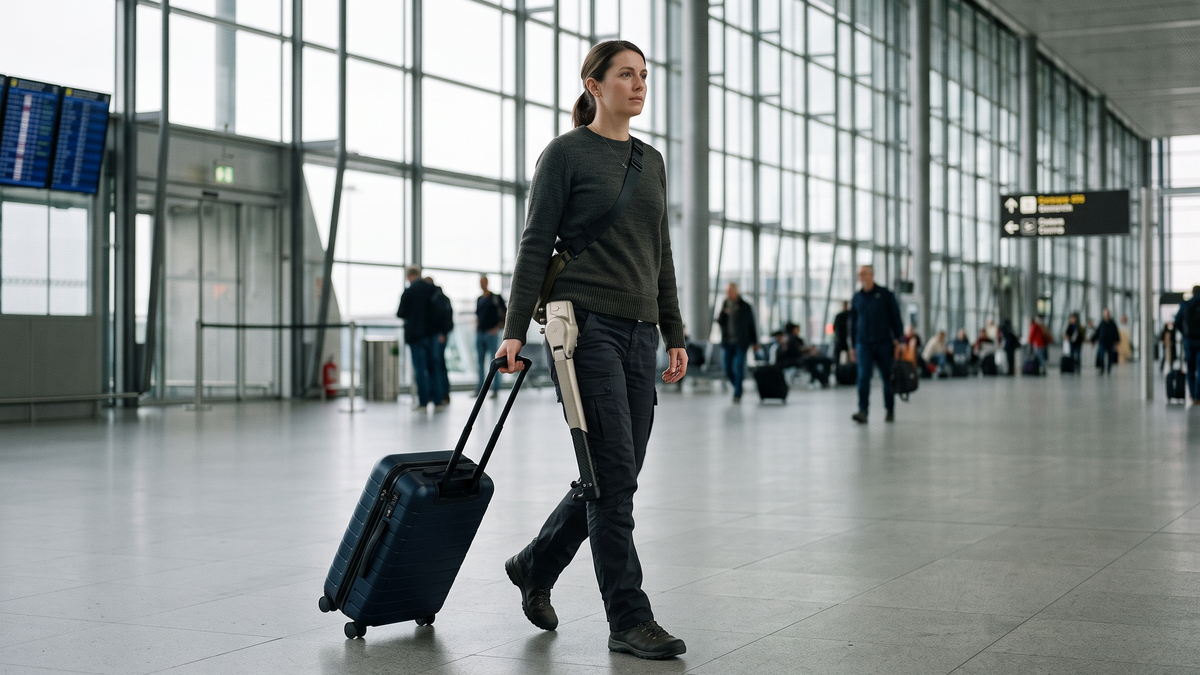
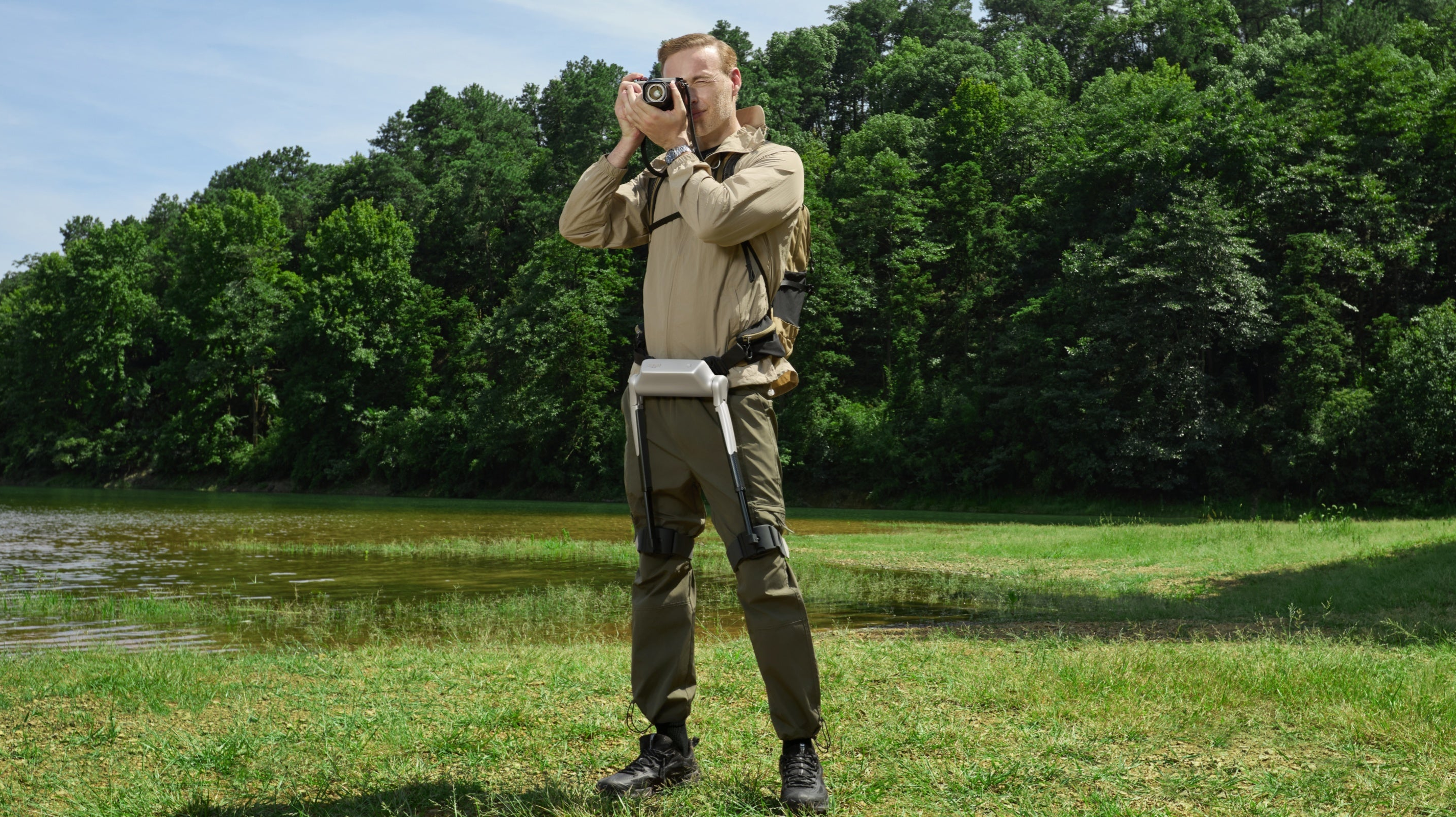
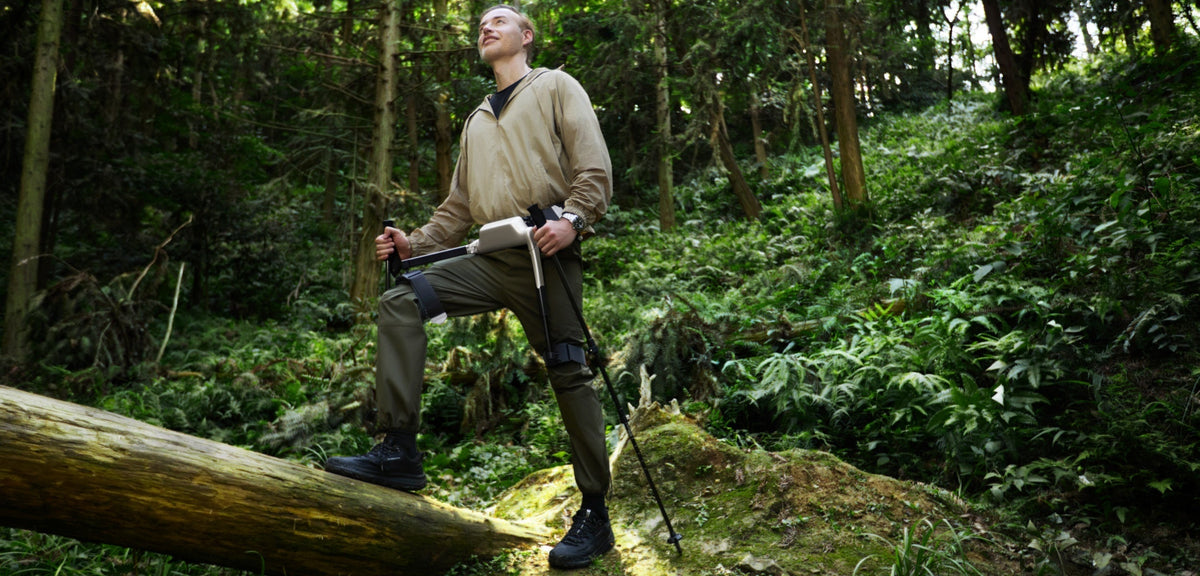
The TENDEX E7 contributes force to your stride from independent motors at each hip, so the fifteen kilometres cost you less than fifteen kilometres. Its gait recognition identifies level walking, stairs, inclines and descents, and adjusts as the city changes shape around you, which on a metro-and-monuments day is constantly.
The practical detail for travel is what it does when you are not wearing it. It weighs approximately 1.3 kg, folds to roughly 26 by 11 by 8 centimetres, and goes on in under ten seconds. It packs. That matters more than it sounds, because the device you have to plan a day around is the device you leave in the hotel room.
E7 City is the variant built for this: distance, transit, stairs and long days on hard ground.

Leave a comment
This site is protected by hCaptcha and the hCaptcha Privacy Policy and Terms of Service apply.